Showing posts with label ip rights. Show all posts

Wednesday, 21 October 2020

Colour Trademarks in the Pharmaceutical Industry


A trademark aids the customers in identifying the goods and services of one undertaking from those of others. In the present fast-paced society, conventional marks are not the only type of marks available that are worthy of obtaining trademark protection. Colours and colour combinations play a significant role in differentiating the goods in the market. A colour trademark is the one in which there is at least one colour used that performs the function of a trademark, i.e., uniquely identifying the commercial origin of goods and services. Nowadays, several countries allow the registration of a single colour trademark. A question arises when we ponder upon the relevance of colour marks in pharmaceutical products – Is there any necessity to protect colour marks when products are bought based on prescriptions by doctors? The answer is yes. Pharmaceutical companies have increasingly started to register colour marks on pharmaceutical products to indicate the source of those products as belonging to their brand. It is because of several factors – firstly, a lot of customers nowadays purchase Over-the-Counter (OTC) drugs, and trademarks assist in recognizing a specific brand, which they trust. Secondly, a colour on pharmaceutical products has come to be seen as creating a brand image, and thirdly, colour trademarks serve as a mark of the brand, which creates it. Some examples of pharmaceutical colour trademarks are as follows:

Purple for AstraZeneca's Nexium called "The purple pill"

Purple for AstraZeneca’s Nexium called “The purple pill”
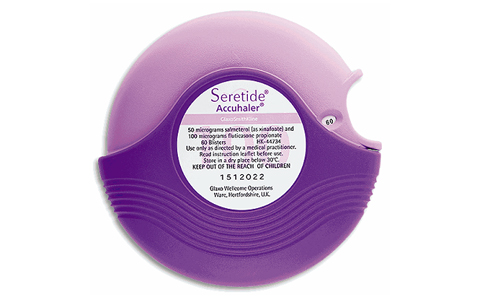
Purple for GlaxoSmithKline's Seretide Inhaler

Purple for GlaxoSmithKline’s Seretide Inhaler
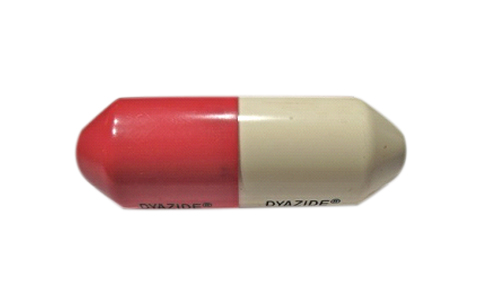
SK&F's red and white Dyazide capsule

SK&F’s red and white Dyazide capsule

Understanding the Role of Colour Trademarks in the Pharmaceutical Industry

The trademarks for pharma goods can be classified into word marks, device marks, and trade dress. Word marks consist of drug names such as Nexium, Prilosec, Zinetac, etc. Device marks consist of the appearance colour, shape, and logo of the product. Trade Dress comprises packaging of drugs like containers, blisters, flasks, vials, etc.

Until the mid-1900s, all the prescription drugs that were in pill form were uniformly white and round. The OTC medication was also white or pastel in colour. Colours were introduced in the 1960s. By 1975, with the emergence of soft gel capsules, colours such as red, yellow, and lime green were seen. Today there are thousands of colours present in the pharmaceutical market. The colours chosen are for marketing purposes and have no bearing on the efficacy of the drug. Colour marks in the pharma sector have become a crucial branding technique because they address the visual features by distinguishing the products from those of the competitors. Colours are now being used for creating brand images, signifying the personality of the products, and differentiating them from other brands; due to which, the pharmaceutical companies spend large amounts of money today on the most attractive and appealing trade dress and marks for every new product brought to the market.

Colour trademarks can be useful for pharmaceutical products to remain in the market for an extended duration. The same becomes more vital when a brand’s immunity from generics comes close to an end towards the expiration of the patent term. The effectively registered trademarks with acquired distinctiveness may stop the generic companies from manufacturing identical-looking products. The customers may adhere to the registered products as the generic versions will look, unlike the original ones that belong to a brand that they already trust. In this manner, customer loyalty for branded medicines can be built for sustained trade in the marketplace and to uphold the market share even with stiff competition. Colour and colour combinations are a powerful way to create an emotional appeal.

The U.S.-based pharmaceutical company, AstraZeneca, in 2015 had filed a case before a Delaware court against the purple colour of the generic form of AstraZeneca’s antacid medicine, Nexium, which they marketed as “the purple pill.” The generic pill, also purple (in colour), was sold by Dr. Reddy’s Laboratories in the United States. AstraZeneca contended that this was a substantial breach of an agreement between the two companies. AstraZeneca argued that the shade of purple used was parallel to the shade of the original medicine – successfully infringing on its trademark registration for the purple medicines. Ultimately, Dr. Reddy’s Laboratories had to relaunch the generic capsules in blue colour.

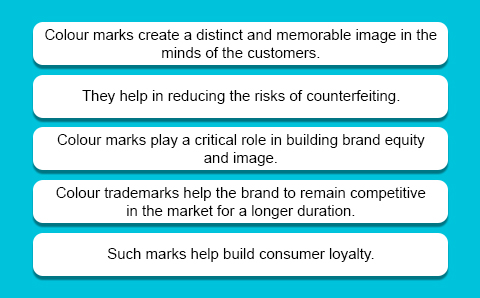
Advantages of Colour Trademarks for Pharmaceutical Products
Trademarks

International Requirements of Registering a Colour Mark

The TRIPS Agreement lays down “Combinations of colours…shall be eligible for registration as trademarks although members may make registrability depend on distinctiveness acquired through use and members may require, as a condition of registration, that signs be visually perceptible.” Hence, countries can choose to register colour trademarks based on acquired distinctiveness and graphical representation.

In the United States, traditionally, courts were unwilling to recognize marks comprised exclusively of colours or colour combinations. It was only in 1995 that the United States Supreme Court held in the case of Qualitex Co. v. Jacobson that, “sometimes, a colour will meet ordinary legal trademark requirements. And, when it does so, no special rule prevents colour alone from serving as a trademark. However, the Court also observed that a single colour may not be intrinsically distinctive and may only be protected when it has developed a secondary meaning through use parallel to descriptive marks or words.

Countries such as Germany, Norway, Sweden, and the UK, need “display of secondary meaning or acquired distinctiveness before registering a colour per se.” The European Union Intellectual Property Office (EUIPO) also follows this rule. The UK has also acknowledged and registered colours as trademarks, for instance – “silver for anthracite briquettes,” red for the “pin of a shackle,” and “three red bands on the handle of rackets.”

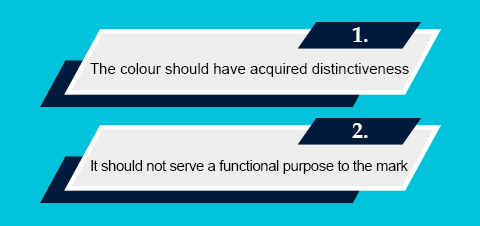
The two most crucial requirements to remember for obtaining a trademark registration for a single colour mark are as follows:
Trademarks

Proprietors should be careful not to advertise or rely on colour as a necessary function of that particular product, as this would lead to rejection based on it being an essential feature of the trademark.

The Indian Perspective

In India, the pharmaceutical industry notably accounts for the maximum trademark registration applications among all the sectors. Colour marks are not easy to register in India, specifically single colour marks. Although the Trademark Act, 1999 does not explicitly forbid the registration of the single colour marks; showing distinctiveness in a single colour is tricky unless the colour, due to a long association with a specific mark, has come to characterize the source/origin of the product, enabling easy differentiation of the product from others in the same class. Nevertheless, single colour trademarks have been protected in India, such as the colour purple for Cadbury, colour blue for Parachute bottles, colour magenta for Telekom AG, and so on.

In India, OTC medicines and pharmaceutical wellness products are readily available without any requirement of a prescription. In OTC and wellness medicines, where the person makes his own buying choice is where trademarks play a much more significant role. A branded mark, which the customer is familiar with and trusts, has a higher possibility of being picked and helping build upon brand loyalty.

In Glaxo Group Limited vs. S.D. Garg case, the Court applied the principle of ‘likelihood of confusion’ based on the deceptive similarity of ‘Bectodine – M and ‘Betadine’ marks, trade dress, and packaging as well as the identity of colour scheme, get-up, and layout. The Court also observed that although medicines are used to treat the same ailment, this, however, does not negate the possibility of side effects.

The Manual of Trademarks, Practice, and Procedure 2015 provides the following points for registration of colour marks:

  • If the applicant is claiming a combination of colours, as applied to the goods or their packaging, or as used in relation to their services, as a trademark, they should claim this by identifying the trademark as a colour trademark. Along with the exact description of the colour combination as per the International Classification System of Colours as well as supplying a graphical representation of the trademark, the applicant must also provide a concise and accurate description of the trademark on the application. The manual further gives an example of a suitable form of description for a trademark, which consists of a combination of colours applied to a pharmaceutical capsule as: “The trademark consists of a maroon colour applied to one half of a capsule at one end, and a gold colour applied to the other half, as illustrated in the representation on the application.”
  • If a statement has been made in the application that the trademark consists of combination of colours only, the trademark will be regarded as colour trademark. If a particular combination of colours of packaging has become distinctive, in fact, as indicating the goods of a particular trader, there is no reason why it should not be protected by registration. However, if the colours are used not in a special or particular pattern or arrangement, it is likely to be more difficult to prove that in such cases colour would lend distinctiveness as a badge of origin.
  • Wherever the exclusive right to colour is sought, weighty evidence should be necessary to overcome the objection under Section 9(1)(a) of the Trademark Act, 1999, which bars registration of trademarks that do not have a distinctive character.
  • Single Colour: A single colour may be registerable as a trademark if it is very unusual and peculiar in a trade and is recognized by traders and consumers alike that it serves as a badge of origin for that class of goods.
  • Combination of Colours: A combination of colours may be registrable, but this will depend on its uniqueness and how it is used. If the colours are presented as a figurative mark, then as few as two colours could be accepted; when applications consist merely of colours applied to the goods or their packaging, it will be necessary to consider how unusual the colour combination is in relation to the goods and whether, prima facie, the combination is likely to strike the relevant consumer as an indication of trade source.

Final Thoughts

As colour marks are being increasingly used by the pharmaceutical industry, one needs to comply with the trademark laws and procedures and ensure that the colour mark indicates the source of the product, that the colour is not a functional aspect of the product, and that it has acquired distinctiveness. Since a single colour lacks the inherent capability to be distinct, the standard of proof has been kept high. However, there is no exhaustive test as to whether the colour has acquired distinctiveness, and it all depends upon how the customers perceive the colour. Therefore, pharmaceutical companies need to build their brand by using distinctive trademarks, specifically colour marks. The best practices to be followed in this aspect are as follows:

  • Advertisements showing that the colour has some functional advantages should be avoided.
  • The colour feature should be used in a very specific manner on specific products such that it leaves many available alternative branding features for those manufacturing the same drug. For example, with Nexium, there was no advantage of making the pill purple other than making it identifiable to the brand. It left numerous other types of features and colours available to those manufacturing the same antacid pill.
  • The colour feature of the drug should be marketed well.
  • In case of a single colour mark, it should be registered once it has acquired distinctiveness, hence adding valuable protection to a pharmaceutical brand.
  • The particular colour(s) on which protection is being sought should be defined well with the help of internationally recognized colour identification systems such as the Pantone Matching System. 👉 ✅  For view source:  https://bit.ly/2FQe3r0

Friday, 1 November 2019

YouTube Settles Lawsuit against Christopher for False Copyright Claims


Copyright Infringement

YouTube, an American video-sharing site headquartered in San Bruno, California, has settled the lawsuit against Christopher Brady, who attempted to extort ‘Minecraft’ creators by falsely flagging their videos over Copyright Infringement and refused to cease unless they paid him.
In Brady’s official apology, which is a part of this settlement, Christopher L. Brady admitted that he had provided YouTube with dozens of notices falsely claiming that matter uploaded by YouTube users infringed his copyrights. Mr. Brady wrote that he apologized to the YouTube community, to YouTube itself, and to the YouTube users who are directly impacted by his actions.
As per the settlement terms, Brady will also pay $25,000, which YouTube intends to donate to non-profit advocacy that advocates on behalf of ‘Minecraft’ creators.
YouTube spokesperson Farshad Shadloo, in a statement, said that this settlement puts light on the real consequences for those who attempt to misuse their copyright work. Besides, they will continue their practice to prevent further abuse of their creator’s works.
YouTube filed against Brady in August this year, after witnessing complaints, tweeted by two Minecraft-focused creators – Kenzo with 462K subscribers and ObbyRaidz with 11.4K subscribers, stating that Christopher had filed false copyright claims against them. The plaints explained that Brady, who used more than 15 different identities, targeted these two and many other creators by filing some manual copyright claims alleging creators’ channels had stolen his content. The channels then got one copyright strike for every claim. As YouTube holds a three-strikes-and-you-are-out system with copyright infringement, a third strike would have led grounds for the end of the creators’ channels.
After the second strike, Brady served creators with the messages demanding money in exchange for canceling the previous two strikes and not filing a channel-terminating third strike.
Through the messages, Brady communicated that once they receive their payment, they will cancel both strikes on creators’ channels. On the other hand, if creators decide not to pay the set amount, they will file a third strike. He also wrote that the creators have very little time to make their decision. The sum that he demanded ranges from $100 to $300.
The strikes were removed from Kenzo’s and ObbyRaidz’s channels after they notified YouTube.
YouTube said that they regularly terminate accounts of those who misuse their copyright system. Nevertheless, in this case of egregious abuse where the copyright removal method was related to extortion, they felt compelled to pursue further towards legal action and to make it clear that they do not tolerate abuse of their platform or its users. For view-source: https://www.kashishipr.com/blog/youtube-settles-lawsuit-against-christopher-for-false-copyright-claims/

Don’t forget to follow us on social media:

Thursday, 31 October 2019

All About Two Vital Trademark Symbols – TM & ®


Trademark Registration

Undoubtedly, most of us know that a trademark is a type of Intellectual Property (IP) that comprises a recognizable word, sign, symbol, or expression used to distinguish products of a particular source from those of others. However, this is not all. To get the expected benefits from trademarks, you need to be aware of all vital elements related to this exclusive Intellectual Property Right (IPR). For instance, TM and ® symbols. These are the two significant components of trademarks that often create confusion, thus limiting the gains of people associated with the IP industry. Like many other individuals and organizations, if you are also confused with these two trademark symbols, then this article is for you!

What do Trademark Symbols TM and ® Mean?

The TM symbol is used for unregistered marks to indicate that the preceding word, logo, or slogan, is a trademark, and the owner is asserting exclusive rights in it. As per the Trademark Law of many countries, trademark registration isn’t necessary to use this symbol for your branding. Note that this symbol doesn’t provide a guarantee that the mark is protected legally. In general, people use the TM symbol, while the relevant Trademark Application is under processing.
On the other side, the ® symbol, which includes letter R enclosed in a circle, is used to indicate that the relevant word, sign, or logo is registered and the owner holds legal rights of ownership on the same. With a strong deterrent effect, it warns people that the violation of the related mark will be considered a breach of trademark laws.

When Should Trademark Symbols TM and ® Be Used?

As mentioned above, the TM symbol only notifies people and competitors that you are claiming ownership rights to the name, logo, etc., next to which it is placed, many countries like the US, UK, and others allow you to use it anytime. Though emphasize unregistered class yet TM symbol is enough to deter competitors or other unauthorized users from using a mark that is either the same or confusingly similar to yours.
In contrast, the ® symbol can only be used when you have successfully registered your trademark with the relevant trademark office. In countries such as the UK and the US, using ® or any other symbol, which indicates that a mark is registered when that’s not, i.e., false representation in regards to a Registered Trademark is a criminal offense. Besides, failure to use the ® symbol in these countries could result in the loss of vital remedies required to sue someone for Trademark Infringement. However, in some other nations such as the Philippines and Mexico, it is mandatory to use the ‘registered mark/® symbol’ to maintain the registration. As trademark law and its privileges vary from nations to nations, it is better to step into this field after having precise and comprehensive information regarding the rules of the region where you want to get your mark registered. Knowledgeable IP Attorney can be the best helping hand if you are in any doubt and want precise solutions and guidance.

Where Should Trademark Symbols TM and ® be placed?

The most common location to place these two trademark symbols is the upper right corner of a mark in superscript. Nevertheless, if the placement on the top appears unpleasant, then it is acceptable to place the symbols on the lower right-hand corner.

Which Route Should Be Taken to Obtain Trademark Protection?

Due to some confusing cases associated with the use of trademark symbols, large companies who own many registered trademarks evade using the symbols to which they are entitled. Moreover, in most cases, they use the symbols only for some products, not for all. Electing not to utilize the symbols isn’t a good idea as it can affect legal actions for infringement, and thus, limit the damages that you otherwise can claim.
™ or ®? No matter which route you plan to take as per your needs, Trademark Registration is essential to reach complete protection. Although this may seem simple, the process as a whole can be tedious and could prevent you from opting for trademark registration. But don’t worry as having an experienced Intellectual Property Firm that specializes in registering brands can help you to apply for and get your mark registered without any hassle. What makes it the best way is that most of these companies are willing to do it for you at a reasonable price. For view-source: https://www.kashishipr.com/blog/all-about-two-vital-trademark-symbols-tm/

Don’t forget to follow us on social media:


Wednesday, 30 October 2019

How Can You Protect Your Industrial Design In India?


Industrial Product Design

In our day-to-day life, we come across various objects that are recognized by their designs. Products that are artistically designed can grab the attention of the viewers the moment they see them. To get these kinds of eye-catchy designs, you may need to invest thousands in hiring professional designers or getting blueprints. Obviously, you wouldn’t want anyone else to come up with the same or similar design for which you have paid a remarkable amount. If it is so, then this article is noticeably beneficial for you. Here, you will get aware of Industrial Product Design protection, the best way to safeguard your designs legally.
Industrial design protection applies to the shape, configuration, color, line, or surface pattern, which either increases aesthetics or improves the visual appearance of the design. As per the Design Act, 2000 of Indian Intellectual Property Law, industrial design protection provides the exclusive rights to create and use the articles, including the protected design only to the selected people. The Intellectual Property Rights (IPRs) that this protection provides to the owner rest with him/her for ten (10) years. However, if the owner wants, they can be renewed for an additional period of 5 years. To obtain protection for your design in India, you need to get it registered in this specific country.

What Pre-requisites Does a Design Need to Qualify for Protection?

To get protection under IP Law of India, a design should be:
·         Non-obvious,
·         Related to shape, pattern, configuration, or ornamentation of any product,
·         Novel and original, i.e., not published or used anywhere before the date of application for registration,
·         Non-contrary to the morality or order, that is, it must not hurt the sentiments of anyone.

How to Attain Industrial Design Protection?

The procedure to obtain design protection is simple. In India, all designs are categorized into different classes according to the Locarno Classification. It is a classification established in 1968 by the Locarno Agreement for the registration of industrial designs and models. The procedure to get the design protection starts from the step of applying for the same before the Design registry. It is advisable to do the application filing after recognizing the class to which the design in question pertains. In general, the design office provides two options, i.e., paper filing and online filing. The application to be submitted to the office should include the design for which you want protection, along with classification code and description associated with the design. Once your application is received, the office will make it undergo examination followed by issuing objections, which may result due to lack of any essential requirement or something inappropriate. Here, you need to rectify the application based on the mentioned objections and then respond to the office within three months. Now, if the design application succeeds in meeting all the requirements, protection will be granted. Once granted successfully, the right to enjoy the exclusivity remains with you as an owner for the period mentioned above.

Why is Obtaining Industrial Design Protection Crucial?

The outer appearance of a product is something that a viewer sees before anything else. Being visually attractive and appealing, it can act as a value-adding aspect, which in turn could increase the marketability of the product. In many cases, the outer appearance/design itself becomes the identity of a brand, for example – the contours of the iPhone/iPad/iPod, Coca Cola’s contour bottle, and the shape of the Volkswagen Beetle. It is the reason why designs that influence the outer appearance of a product need to be protected to prevent others from taking advantage of original owners’ unique creation in this world of heavy competition.
Protecting a design means prohibiting counterfeit products appearing similar to original ones from destroying the relevant brand’s efficacy and safety. When it comes to overall development, the protection for unique industrial designs encourages creativity in the manufacturing and industrial sectors, which results in an increase in commercial activities. Indeed, the increase in such activities will ultimately profit the entire nation by enhancing the overall economy.

Bottom Line

As per the perspective of the old saying ‘the first impression is the last impression,’ the design and visual appeal of any product are very significant in the present era of creativity, aesthetics, and presentation. The design of a product not just makes the first impression but also explores its functionality amongst the users. Consequently, the ability to design a productive appearance is a talent in itself. So why not secure your efforts and creativity when even the IP Lawyers, government, and IP administrators are suggesting the nation to do so. The time and money you invest in coming up with such a creation are valuable. Hence, think beyond your creation’s functionality and look, i.e., don’t allow others to make profits on it as it is your IP, and you have all the rights to keep the advantages only to you.  For view-source: https://www.kashishipr.com/blog/how-can-you-protect-your-industrial-design-in-india/
Don’t forget to follow us on social media:

Tuesday, 29 October 2019

Intellectual Property Protection: The Growing Need for Virtual Businesses


Intellectual Property Protection

Gone are the days when running a business or going to work meant getting all bedecked, traveling to a building, and spending the whole day there for getting the job done. In today’s world, we often see people working from the table next to ours at a restaurant or coffee shop. These people are freelancers who must be thanking the concept of “Virtual Business” for providing them with this new sense of work freedom.
With the onset of the Internet and continuously advancing technology, the meaning of virtual has changed over the years. For instance, around a decade ago, virtual seemed to reflect businesses outsourcing their work to the candidates working in other cities, while the current buzzes associated with the term are about allowing employees to “work remotely.”  Unfortunately, as the meaning of the phrase is changing, not just the opportunities for employees and employers, but the complications for ensuring the protection of the work in the virtual world are increasing. The virtual or computerized information can be copied and distributed in other networks easily in just a few clicks, and therefore, need to be protected with effective shields like Intellectual Property Protection.

Why Virtual Businesses Need Intellectual Property Protection?

Due to the growth of the internet, virtual commerce has emerged as one of the most profit-making businesses worldwide. Nearly all these businesses operate on working models in which their online presence, whether in the form of an app or website, is of paramount importance. Nevertheless, the online platform has served as not just the boon but also a bane for such businesses by allowing theft and imitation of their online assets, thus spawning a need to ensure the protection of information present online and just some click away from being meddled. In this instance, Intellectual Property Law appears to be the best way to prohibit unauthorized copying and distribution of any material available online without the consent of the original owner.
Intellectual Property (IP), as the term itself suggests, is a category of assets that includes intangible creations of human intellect. The idea that every original creator/ owner of such property has the right to safeguard the same has facilitated the evolution of intellectual property protection.
Undoubtedly, with the appropriate use of Intellectual Property Rights (IPRs) obtained under IP protection, you cannot just prevent theft and misuse of your valuable assets but also ensure your business growth. In other words, IPRs can act as a fuel to your business success by maintaining goodwill amongst the consumers and preventing issues like IP infringement.

How Can Virtual Businesses Ensure Intellectual Property Protection?

Websites are assuredly the most vital assets that enable virtual businesses to promote their products and services to generate sales by driving customers. They act as a guide that helps the consumers to collect appropriate information about your business and products or services that the interested site visitor wants to buy. Indeed, as a website is a foremost thing that your target customers and search engines come across, it must be not just catchy but unique also. In such circumstances where uniqueness matters a lot, you can’t afford copying of your site’s content, image, or anything else.
Although websites are the most vulnerable online asset, the risks associated with the copy of their content, layout, images, and more increase as the company’s revenue hikes. More is the revenue, higher are the risks. That’s why almost every virtual business should ensure the protection of its site. To obtain complete protection, you need to understand which assets of your site can be protected and how. For instance, Copyright Registration can safeguard your site’s content, including images, articles, etc. Trademarks ensure the security of the site’s name, logo, or other signs that help the viewers to identify your business. Industrial Design Law is intended to defend computer-generated graphic user interfaces, symbols, displays, and more. Patent Protection is applicable for securing software and technical tools. In short, almost every asset of your website can legally be protected by one, or the other form of IP rights, the only need is to comprehend which right suits what.

Conclusion:

Virtual businesses are expected to reach over trillions by 2020, with the top areas in the marketplace being computer and electronics. In such an era, ensuring stringent protection for intangible assets is not at all an easy feat. Moreover, the arrival of more and more counterfeit products in the market makes the pressure to fight against infringement issues more immense. Ultimately, it is necessary for the businesses, whether virtual or any other, to stay meticulous and take measures to reduce the susceptibilities of being infringed. Fasten up your belt as gone are the days to act lazily, and now, it is the time to stop the counterfeiters by making the best possible use of your IP rights. For view-source: https://www.kashishipr.com/blog/intellectual-property-protection-the-growing-need-for-virtual-businesses/

Don’t forget to follow us on social media: