Showing posts with label kipr. Show all posts

Wednesday, 28 October 2020

A careful dissection of the Madrid System


It is appropriately established that the Madrid System is bifurcated into the Madrid Agreement (1891) and the Madrid Protocol (1989). It was a welcoming introduction in the realm of trademarks for it sought to marshal and leave tangle-free the filing of trademarks abroad, which was regarded as being quintessential since trademark laws in all jurisdictions vary in practice. The system, alongside the many added benefits, enables a streamlined filing procedure with a modest fee, decreasing the quantum of applications to be filed for a single mark.

To give a brief overview, availing the benefits entailed in the Madrid System requires an applicant to file a national trademark application, also known as the ‘Basic application.’ The proprietor is then eligible to file a request for International Registration (IR) of marks, which is a means of progressing and increasing the outreach of the application to the designated states.
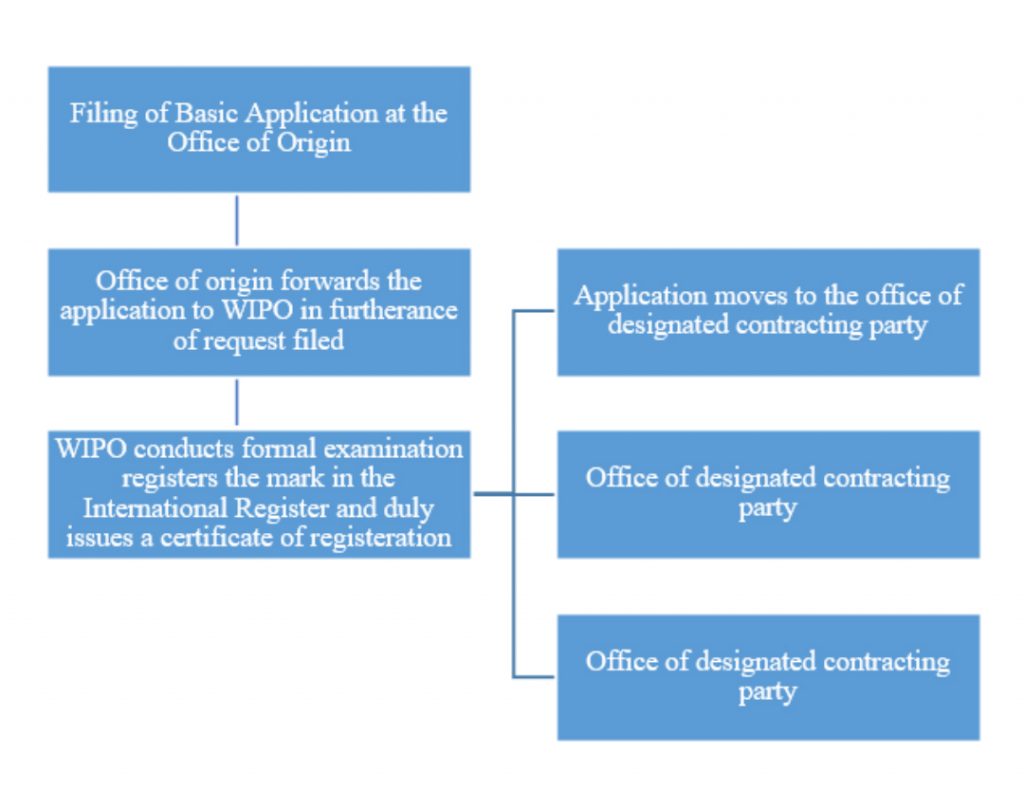
Process of Filing

Fig1: Process of Filing

Although the two contribute to the creation of the Madrid system, per se, there are differences found within the two bifurcations since the Protocol aimed at overcoming the problems within the Agreement. Therefore, the key features of the Protocol can be contrasted with the Agreement as per the points of differences mentioned below:

  • Primarily, as per the Madrid Protocol, a ‘Basic application’ would also suffice for the filing of an IR contrary to just the basic registration.
  • Also, where the Agreement requisitioned French as the only official language, the Protocol added English and Spanish to the list of workable languages.
  • Furthermore, the Protocol limits the period for notification of refusal of the IR to a period of 12 months to 18 months, where the Agreement resorted to a twelve-month window period. The Protocol enables a prompt establishment and centralized manner of controlling rights emanating out of registration.
  • Lastly, the scope of protection of marks is 20 years as per the Agreement, whereas the Protocol limits it to 10 years, which is further subject to renewal in both cases.

It might appear trivial to pluck out any blemishes in the system after 31 years of successful enforcement; however, it seems to be pertinent to uncover the positives as well as the negatives before actually resorting to either of the two routes for seeking protection of marks.

The gravest issues arising under the Madrid System is the issue of ‘central attack,’ which contemplates the fact that since the foundation of the application is based on one national application, in the event of cancellation or abandonment or proven invalidation, the same would naturally result in the automatic cancellation of all ancillary protections sought through the System. The situation can indeed be recovered from since the Madrid Protocol facilitates a procedure for conversion of International Registrations (IRs) into national applications for each of the designated states within three consequent months after paying due consideration. Contrary to the Madrid Protocol, the Madrid Agreement provides no such remedy. However, this hurdle has a fixed tenure of 05 years after which any harm to the basic application would not affect rights protected abroad since, after the lapse of the five-year period, IRs become independent of the national registration.

Furthermore, international registrations follow a strict timeline of processing, which is eighteen months. Quite often, the applications at the national phase are not processed by then, frequently leading to untimely objections and concerns, which could economically be very damaging for the proprietor of the concerning trademark.

Another added disadvantage here is that where on the one hand, it is popularly acclaimed that intellectual property rights are easily transferable – the Madrid System, on the other hand, limits this right only to the convention countries. Thereby, once the Madrid route is taken, assignment or transfer of rights beyond convention countries is not permissible; the proprietor then has to convert the mark into a local mark, which is not only heavy on the pocket but also a complex procedure. Thus, this could be disadvantageous where a potential opportunity from non-Madrid abiding countries is encountered for probable profitable sales or assignment of rights. Also, a handful of the countries do not acknowledge registration certificates issued under the aegis of WIPO, which ultimately implies resorting to the aid of national trademark offices for a recognized certificate at an additional cost.

In addition to this lies the problem of making modifications to the classification in the Madrid-based application. It is permissible to wipe-out, but making additions to the classification to broaden the admissibility of the said application, is not permissible. Any material or non-material changes to the mark are also not warranted.

Scale of disadvantages

Fig.2: Scale of disadvantages

Although it may be appealing to blindly resort to the Madrid Protocol as it offers to be a ‘one-stop-shop’ for one’s effort to trademark coupled with the benefit of a simple yet speedy examination (as acclaimed) and a cost-effective approach by delineating the need of a local council, it is imperative to take into consideration the limitations mentioned above. Hence, it is highly advisable to conduct a cost-benefit analysis of the number of jurisdictions along with the practices opted therein since all jurisdictions are not tenable to the Protocol. Also, comprehensive searches in designated jurisdictions need to be conducted to uncover prior marks, which otherwise could prove harmful in the aftermath. A concrete branding strategy ought to be put in place to avail of the maximum potential value of the trademark at hand. 👉   For view source:  https://bit.ly/34A4B4E


Don’t forget to follow us on social media:

Facebook – https://www.facebook.com/kashishipr/

Twitter – https://twitter.com/kashishipr

Linkedin – https://www.linkedin.com/company/kashishipr/

Pinterest – https://www.pinterest.com/kashishipr/

Tumblr – https://kashishipr.tumblr.com/


Contact - US

Email Id: kashishipr@kashishipr.com

Website: www.kashishipr.com

Wednesday, 21 October 2020

Colour Trademarks in the Pharmaceutical Industry


A trademark aids the customers in identifying the goods and services of one undertaking from those of others. In the present fast-paced society, conventional marks are not the only type of marks available that are worthy of obtaining trademark protection. Colours and colour combinations play a significant role in differentiating the goods in the market. A colour trademark is the one in which there is at least one colour used that performs the function of a trademark, i.e., uniquely identifying the commercial origin of goods and services. Nowadays, several countries allow the registration of a single colour trademark. A question arises when we ponder upon the relevance of colour marks in pharmaceutical products – Is there any necessity to protect colour marks when products are bought based on prescriptions by doctors? The answer is yes. Pharmaceutical companies have increasingly started to register colour marks on pharmaceutical products to indicate the source of those products as belonging to their brand. It is because of several factors – firstly, a lot of customers nowadays purchase Over-the-Counter (OTC) drugs, and trademarks assist in recognizing a specific brand, which they trust. Secondly, a colour on pharmaceutical products has come to be seen as creating a brand image, and thirdly, colour trademarks serve as a mark of the brand, which creates it. Some examples of pharmaceutical colour trademarks are as follows:

Purple for AstraZeneca's Nexium called "The purple pill"

Purple for AstraZeneca’s Nexium called “The purple pill”

Purple for GlaxoSmithKline's Seretide Inhaler

Purple for GlaxoSmithKline’s Seretide Inhaler

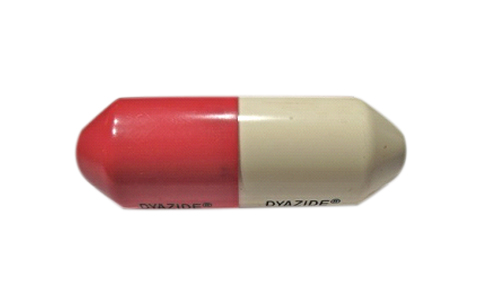
SK&F's red and white Dyazide capsule

SK&F’s red and white Dyazide capsule

Understanding the Role of Colour Trademarks in the Pharmaceutical Industry

The trademarks for pharma goods can be classified into word marks, device marks, and trade dress. Word marks consist of drug names such as Nexium, Prilosec, Zinetac, etc. Device marks consist of the appearance colour, shape, and logo of the product. Trade Dress comprises packaging of drugs like containers, blisters, flasks, vials, etc.

Until the mid-1900s, all the prescription drugs that were in pill form were uniformly white and round. The OTC medication was also white or pastel in colour. Colours were introduced in the 1960s. By 1975, with the emergence of soft gel capsules, colours such as red, yellow, and lime green were seen. Today there are thousands of colours present in the pharmaceutical market. The colours chosen are for marketing purposes and have no bearing on the efficacy of the drug. Colour marks in the pharma sector have become a crucial branding technique because they address the visual features by distinguishing the products from those of the competitors. Colours are now being used for creating brand images, signifying the personality of the products, and differentiating them from other brands; due to which, the pharmaceutical companies spend large amounts of money today on the most attractive and appealing trade dress and marks for every new product brought to the market.

Colour trademarks can be useful for pharmaceutical products to remain in the market for an extended duration. The same becomes more vital when a brand’s immunity from generics comes close to an end towards the expiration of the patent term. The effectively registered trademarks with acquired distinctiveness may stop the generic companies from manufacturing identical-looking products. The customers may adhere to the registered products as the generic versions will look, unlike the original ones that belong to a brand that they already trust. In this manner, customer loyalty for branded medicines can be built for sustained trade in the marketplace and to uphold the market share even with stiff competition. Colour and colour combinations are a powerful way to create an emotional appeal.

The U.S.-based pharmaceutical company, AstraZeneca, in 2015 had filed a case before a Delaware court against the purple colour of the generic form of AstraZeneca’s antacid medicine, Nexium, which they marketed as “the purple pill.” The generic pill, also purple (in colour), was sold by Dr. Reddy’s Laboratories in the United States. AstraZeneca contended that this was a substantial breach of an agreement between the two companies. AstraZeneca argued that the shade of purple used was parallel to the shade of the original medicine – successfully infringing on its trademark registration for the purple medicines. Ultimately, Dr. Reddy’s Laboratories had to relaunch the generic capsules in blue colour.

Advantages of Colour Trademarks for Pharmaceutical Products

Trademarks

International Requirements of Registering a Colour Mark

The TRIPS Agreement lays down “Combinations of colours…shall be eligible for registration as trademarks although members may make registrability depend on distinctiveness acquired through use and members may require, as a condition of registration, that signs be visually perceptible.” Hence, countries can choose to register colour trademarks based on acquired distinctiveness and graphical representation.

In the United States, traditionally, courts were unwilling to recognize marks comprised exclusively of colours or colour combinations. It was only in 1995 that the United States Supreme Court held in the case of Qualitex Co. v. Jacobson that, “sometimes, a colour will meet ordinary legal trademark requirements. And, when it does so, no special rule prevents colour alone from serving as a trademark. However, the Court also observed that a single colour may not be intrinsically distinctive and may only be protected when it has developed a secondary meaning through use parallel to descriptive marks or words.

Countries such as Germany, Norway, Sweden, and the UK, need “display of secondary meaning or acquired distinctiveness before registering a colour per se.” The European Union Intellectual Property Office (EUIPO) also follows this rule. The UK has also acknowledged and registered colours as trademarks, for instance – “silver for anthracite briquettes,” red for the “pin of a shackle,” and “three red bands on the handle of rackets.”

The two most crucial requirements to remember for obtaining a trademark registration for a single colour mark are as follows:

Trademarks

Proprietors should be careful not to advertise or rely on colour as a necessary function of that particular product, as this would lead to rejection based on it being an essential feature of the trademark.

The Indian Perspective

In India, the pharmaceutical industry notably accounts for the maximum trademark registration applications among all the sectors. Colour marks are not easy to register in India, specifically single colour marks. Although the Trademark Act, 1999 does not explicitly forbid the registration of the single colour marks; showing distinctiveness in a single colour is tricky unless the colour, due to a long association with a specific mark, has come to characterize the source/origin of the product, enabling easy differentiation of the product from others in the same class. Nevertheless, single colour trademarks have been protected in India, such as the colour purple for Cadbury, colour blue for Parachute bottles, colour magenta for Telekom AG, and so on.

In India, OTC medicines and pharmaceutical wellness products are readily available without any requirement of a prescription. In OTC and wellness medicines, where the person makes his own buying choice is where trademarks play a much more significant role. A branded mark, which the customer is familiar with and trusts, has a higher possibility of being picked and helping build upon brand loyalty.

In Glaxo Group Limited vs. S.D. Garg case, the Court applied the principle of ‘likelihood of confusion’ based on the deceptive similarity of ‘Bectodine – M and ‘Betadine’ marks, trade dress, and packaging as well as the identity of colour scheme, get-up, and layout. The Court also observed that although medicines are used to treat the same ailment, this, however, does not negate the possibility of side effects.

The Manual of Trademarks, Practice, and Procedure 2015 provides the following points for registration of colour marks:

  • If the applicant is claiming a combination of colours, as applied to the goods or their packaging, or as used in relation to their services, as a trademark, they should claim this by identifying the trademark as a colour trademark. Along with the exact description of the colour combination as per the International Classification System of Colours as well as supplying a graphical representation of the trademark, the applicant must also provide a concise and accurate description of the trademark on the application. The manual further gives an example of a suitable form of description for a trademark, which consists of a combination of colours applied to a pharmaceutical capsule as: “The trademark consists of a maroon colour applied to one half of a capsule at one end, and a gold colour applied to the other half, as illustrated in the representation on the application.”
  • If a statement has been made in the application that the trademark consists of combination of colours only, the trademark will be regarded as colour trademark. If a particular combination of colours of packaging has become distinctive, in fact, as indicating the goods of a particular trader, there is no reason why it should not be protected by registration. However, if the colours are used not in a special or particular pattern or arrangement, it is likely to be more difficult to prove that in such cases colour would lend distinctiveness as a badge of origin.
  • Wherever the exclusive right to colour is sought, weighty evidence should be necessary to overcome the objection under Section 9(1)(a) of the Trademark Act, 1999, which bars registration of trademarks that do not have a distinctive character.
  • Single Colour: A single colour may be registerable as a trademark if it is very unusual and peculiar in a trade and is recognized by traders and consumers alike that it serves as a badge of origin for that class of goods.
  • Combination of Colours: A combination of colours may be registrable, but this will depend on its uniqueness and how it is used. If the colours are presented as a figurative mark, then as few as two colours could be accepted; when applications consist merely of colours applied to the goods or their packaging, it will be necessary to consider how unusual the colour combination is in relation to the goods and whether, prima facie, the combination is likely to strike the relevant consumer as an indication of trade source.

Final Thoughts

As colour marks are being increasingly used by the pharmaceutical industry, one needs to comply with the trademark laws and procedures and ensure that the colour mark indicates the source of the product, that the colour is not a functional aspect of the product, and that it has acquired distinctiveness. Since a single colour lacks the inherent capability to be distinct, the standard of proof has been kept high. However, there is no exhaustive test as to whether the colour has acquired distinctiveness, and it all depends upon how the customers perceive the colour. Therefore, pharmaceutical companies need to build their brand by using distinctive trademarks, specifically colour marks. The best practices to be followed in this aspect are as follows:

  • Advertisements showing that the colour has some functional advantages should be avoided.
  • The colour feature should be used in a very specific manner on specific products such that it leaves many available alternative branding features for those manufacturing the same drug. For example, with Nexium, there was no advantage of making the pill purple other than making it identifiable to the brand. It left numerous other types of features and colours available to those manufacturing the same antacid pill.
  • The colour feature of the drug should be marketed well.
  • In case of a single colour mark, it should be registered once it has acquired distinctiveness, hence adding valuable protection to a pharmaceutical brand.
  • The particular colour(s) on which protection is being sought should be defined well with the help of internationally recognized colour identification systems such as the Pantone Matching System. 👉 ✅  For view source:  https://bit.ly/2FQe3r0